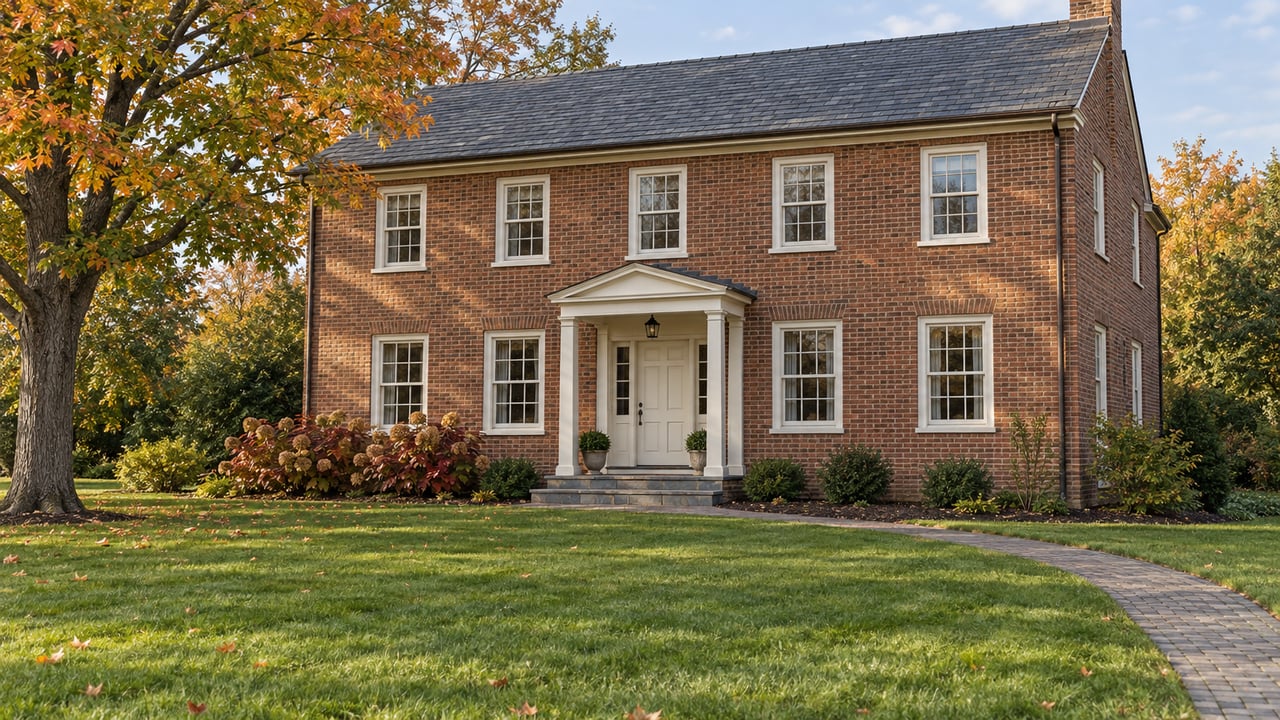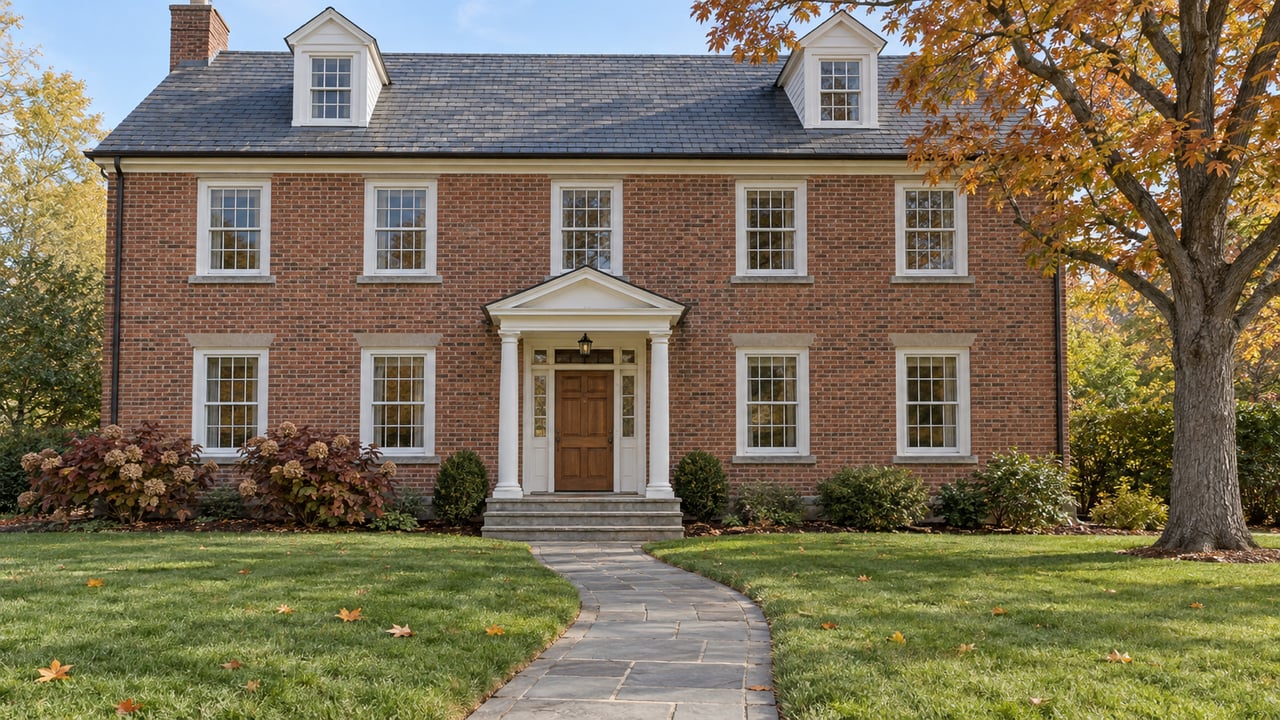
Pull up Summit on any national portal this summer and the story writes itself. Redfin's most recent monthly reading shows the median sale price down about 13.7% year over year, sitting near $1.2M. A buyer sees that and thinks the top of the market has cracked. A seller sees it and worries.
Both readings are wrong, and the reason is buried in the same table. In the month that produced that median, Summit closed eight houses. The year before, it closed fifteen. When a town closes single-digit homes in a month and one estate sale can swing the median by six figures, the median stops describing prices and starts describing which specific houses happened to close.
The 2026 Summit market is not softening. It is thinning. Those are different problems with different consequences for anyone buying or selling here in the next year.
The median is measuring the calendar, not the market
Every other Summit metric points the opposite direction from the headline. Price per square foot, which normalizes for the size and type of what actually sold, is up roughly 2.8% year over year at about $661. Zillow's Home Value Index, built specifically to smooth the small-sample noise that distorts thin markets, reads just above $1.1M and higher than a year ago. Days on market in the most recent monthly reading sat at thirteen, faster than the fifteen recorded a year earlier. Movoto's July 2026 list-side median was $1.69M at $734 per square foot.
| Signal | Headline reading | What it actually tells you |
|---|---|---|
| Median sale price | Down ~13.7% YoY | Distorted by 8 closings in the month |
| Price per square foot | Up ~2.8% YoY | Buyers still paying more per foot |
| Days on market | ~13 days | Faster than a year ago |
| ZHVI | ~$1.1M, up YoY | Small-sample smoothing agrees with price/sqft |
| Active inventory | Low dozens | Nothing to buy, not softening demand |
When the volume-sensitive metric falls and the volume-insensitive metrics rise, the volume-sensitive metric is the one lying. That is the entire trick to reading Summit in 2026.
The two-speed market a seller meets at listing day
Thin markets are not calm markets. They are polarized ones. A prepared, correctly priced Summit home in 2026 will typically be under contract inside two weeks. An underprepared or ambitiously priced home in the same town, on the same street, will sit for months and eventually take a cut that becomes next month's misleading median print.
That is the specific transaction friction buyers and sellers should plan for here. There is no forgiving middle lane. A Zestimate-driven list price on a house that needs paint, a bath refresh, or staging will collect showings but not offers, and every quiet Sunday drags the eventual sale price down. Conversely, a well-prepped listing priced to the correct ring of the market often sees multiple offers before the first weekend closes. The gap between those two outcomes is not luck. It is preparation and price discipline, and in a market clearing this fast the penalty for skipping either shows up on paper within thirty days.
For buyers, the practical implication is that "days on market" is a diagnostic, not a discount. A Summit home that has been sitting for forty days is almost never overpriced by five percent. It is usually overpriced by fifteen, or has a condition issue the listing photos are hiding.
Why supply stays tight: the Broad Street West signal
The other half of the story is why inventory keeps sitting in the low dozens. Summit is the rare Union County town where the political and physical constraints on new supply are visible in dated public filings.
The marquee redevelopment on Broad Street West, the project most likely to add meaningful downtown housing this decade, stalled amid organized resident opposition. Meanwhile the state's Fourth Round affordable housing process assigned Summit a present need of 59 rehabilitation units and a prospective need of 345 new-construction units. On February 12, 2026, Judge Daniel R. Lindemann issued a decision approving Summit's amended Housing Element and Fair Share Plan and the related settlement agreements, directing the City to adopt implementing ordinances by March 15, 2026. The Planning Board took up the amended plan at its February 23, 2026 hearing.
The plan does what a plan can do when a town wants to control the shape of growth. It concentrates future density into named overlay zones rather than spreading it into single-family sections:
- Overlay 3 (Morris/Plain/Aubrey): 12 units per acre, 20% affordable set-aside
- Overlay 4 (Central Retail Business District): density raised to 20 units per acre, 20% set-aside, capped at three stories to respect the Historic District
- Overlay 5 (25 DeForest Ave): conversion of existing office to inclusionary residential, or new inclusionary build up to three stories
- Overlay 6 (39 Park Avenue): existing development, 20% set-aside preserved
The takeaway for a buyer is not which parcel gets built when. It is that Summit's zoning map now tells you exactly where new inventory can appear and where it cannot. Single-family sections like the Highlands, Woodland Park, and Canoe Brook are not in the overlay footprint. The supply pressure will remain what it has been, which is why price per square foot keeps grinding higher even while the closing count looks soft.
What the money actually buys, by section
"Summit" as a market label hides three distinct sub-markets. The list price you should expect to compete for depends heavily on which one.
Highlands and Woodland Park, up on the ridge, pair Franklin Elementary with the neighborhood swim-and-tennis infrastructure of Crestview Swim and Tennis Club, Clearwater Swim Club, and Summit Tennis Club. Homes here trade at a premium tied to lot size, canopy, and views over the Watchung Reservation. This is the section where a $1.7M list price frequently reflects the yard and setting as much as the house itself.
The Canoe Brook section, feeding Washington Elementary and anchored by the Investors Bank Field complex, competes on a different axis. Buyers here are trading a slightly less rarefied hilltop for proximity to fields, courts, and the local institutions that make weekend logistics simple. Magic Fountain, the long-running soft-serve stand, is a reasonable proxy for how family-oriented the section reads on a Saturday afternoon.
Downtown-adjacent blocks off Springfield Avenue put you inside a fifteen-minute walk of the train, the Summit Farmers Market, Hilltop Bicycles, Serena & Lily, the Grand Summit Hotel, and the Reeves-Reed Arboretum's 13.5 acres. The math changes here. Buyers routinely pay more per square foot for less square footage because they are pricing the commute, the walk score, and the Midtown Direct one-seat ride into the number.
Comparing the July list-side median of $1.69M against Redfin's most recent sale-side print of about $1.2M is a useful exercise only if you know which section produced which closings. A month heavy in downtown condos and townhouses will drag the sale median down while list prices on Highlands colonials keep climbing. Both things can be true. Usually they are.
A short checklist before you write an offer
- Ask which section the house is in and pull the last twelve months of closings inside a half-mile ring, not city-wide.
- Look at price per square foot on those comps, not the raw sale price.
- Confirm the current days-on-market figure against what the listing agent is telling you. If it has been more than 21 days in this market, ask what is wrong before you ask about price.
- Check whether the block sits inside or outside one of the Fourth Round overlay zones. It affects long-term neighbor composition and, in a few cases, view corridors.
- Model the offer against the two-speed market. If the home is prepared and priced, expect competition. If it has been sitting, plan for an inspection response that reflects why.
FAQ
If the median is misleading, is now a good time to buy in Summit? The relevant question is not "is the market up or down" but "is the specific house prepared and priced correctly." A well-prepped listing at a fair number will trade competitively. A tired listing at an aspirational number will not, regardless of headline conditions.
Will the Fourth Round housing plan change what my neighborhood looks like? Only if you buy inside or adjacent to one of the named overlay zones on Broad, Morris/Plain/Aubrey, the Central Retail Business District, DeForest Avenue, or 39 Park Avenue. Single-family sections outside those footprints are not in the density map.
Why do days-on-market and price-per-square-foot disagree with the median? Because they measure different things. The median measures the mix of what closed. Price per square foot and days on market measure how the market treated what closed. In a town with fewer than ten monthly sales, the mix moves more than the market does.
The Summit market rewards owners who read past the headline. If you are weighing a move into or out of Summit this year and want a house-by-house read on which section, which price band, and which preparation strategy fits your situation, Best Jersey Burbs is built for exactly that conversation. Schedule your free consultation and we will walk the numbers with you.